How to Read a Size Chart Before You Buy a Cardigan
The single most common reason a garment goes back in the box is not quality. It is that the letter on the label meant something different at this maker than it did at the last one. A size chart solves that, but only if you read it the way the manufacturer wrote it.
Letters are not a standard, measurements are
There is no legal or industry definition of a women's medium in the United States. Every brand sets its own grading, and a maker who sells mostly oversized silhouettes will cut a medium several inches wider than one who sells fitted knits. Two cardigans on the same rail can both say M and differ by four inches across the chest.
The measurement chart is the part that carries real information. It is expressed in inches, it is measured on the flat garment, and it does not change meaning between brands. When we list a piece, that chart is the maker's own, reproduced rather than summarised.
The one measurement that predicts fit
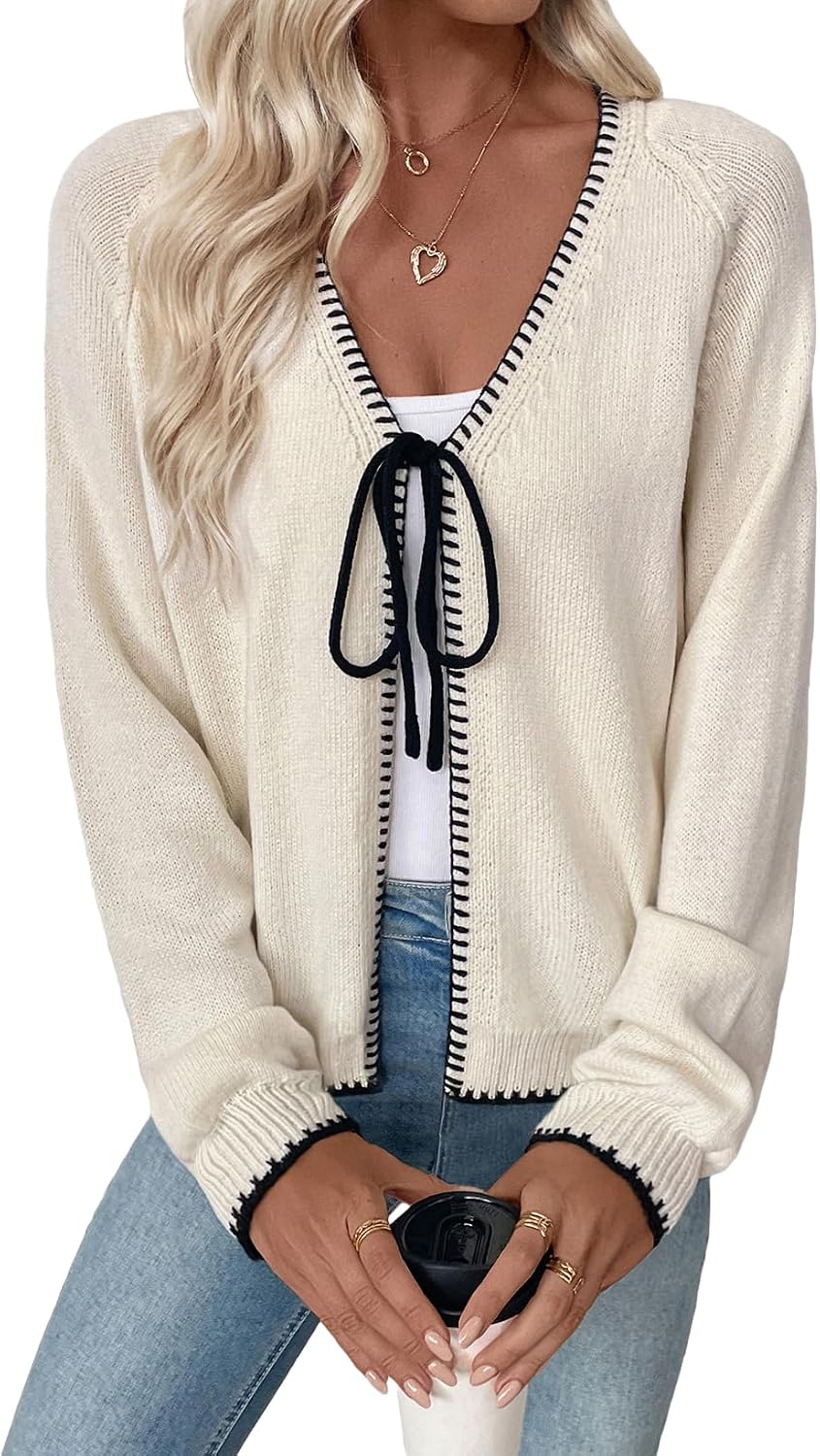
For an open-front cardigan, the number that matters most is the chest or bust measurement taken flat, armpit to armpit, and doubled. It tells you how the piece will sit over whatever you wear underneath, which for a layering garment is the whole point.
Take a cardigan or a jumper you already own and like. Lay it flat, smooth out the wrinkles without stretching the knit, and measure straight across from one underarm seam to the other. Double that figure. Now compare it to the chart. If your favourite piece measures 21 inches across and the chart's medium is 19, you want the large.
Length, sleeve and the drop you actually want
Body length is measured from the highest point of the shoulder down to the hem. This is where cropped, regular and longline diverge, and it is worth checking against a garment you own rather than guessing from a photograph on a model whose height you do not know.
Sleeve length on a dropped-shoulder knit is measured from the centre back of the neck rather than from the shoulder seam, because the seam has moved. If a chart gives a number that seems far too long, check which method it used before you size down.
Between two sizes, let the silhouette decide
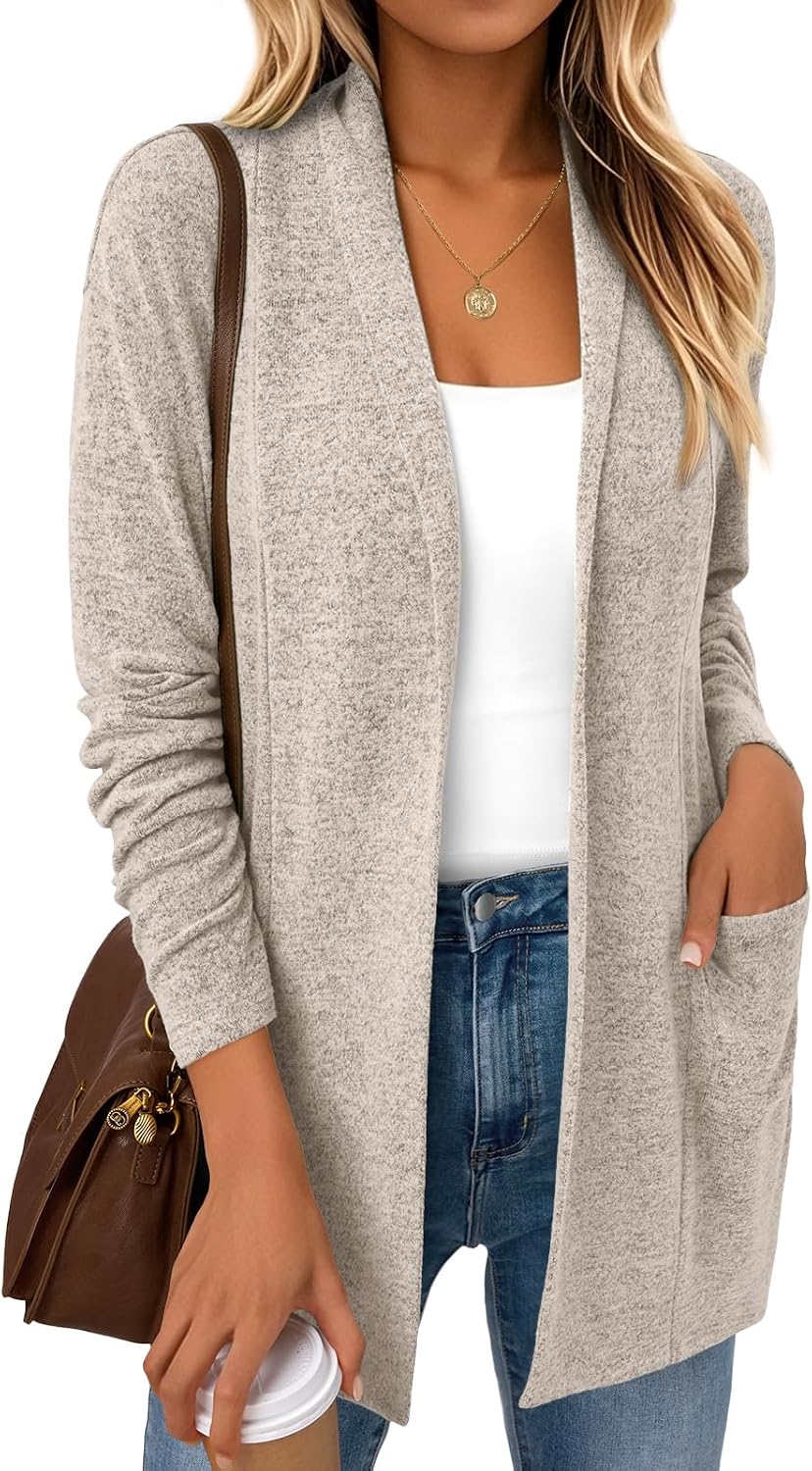
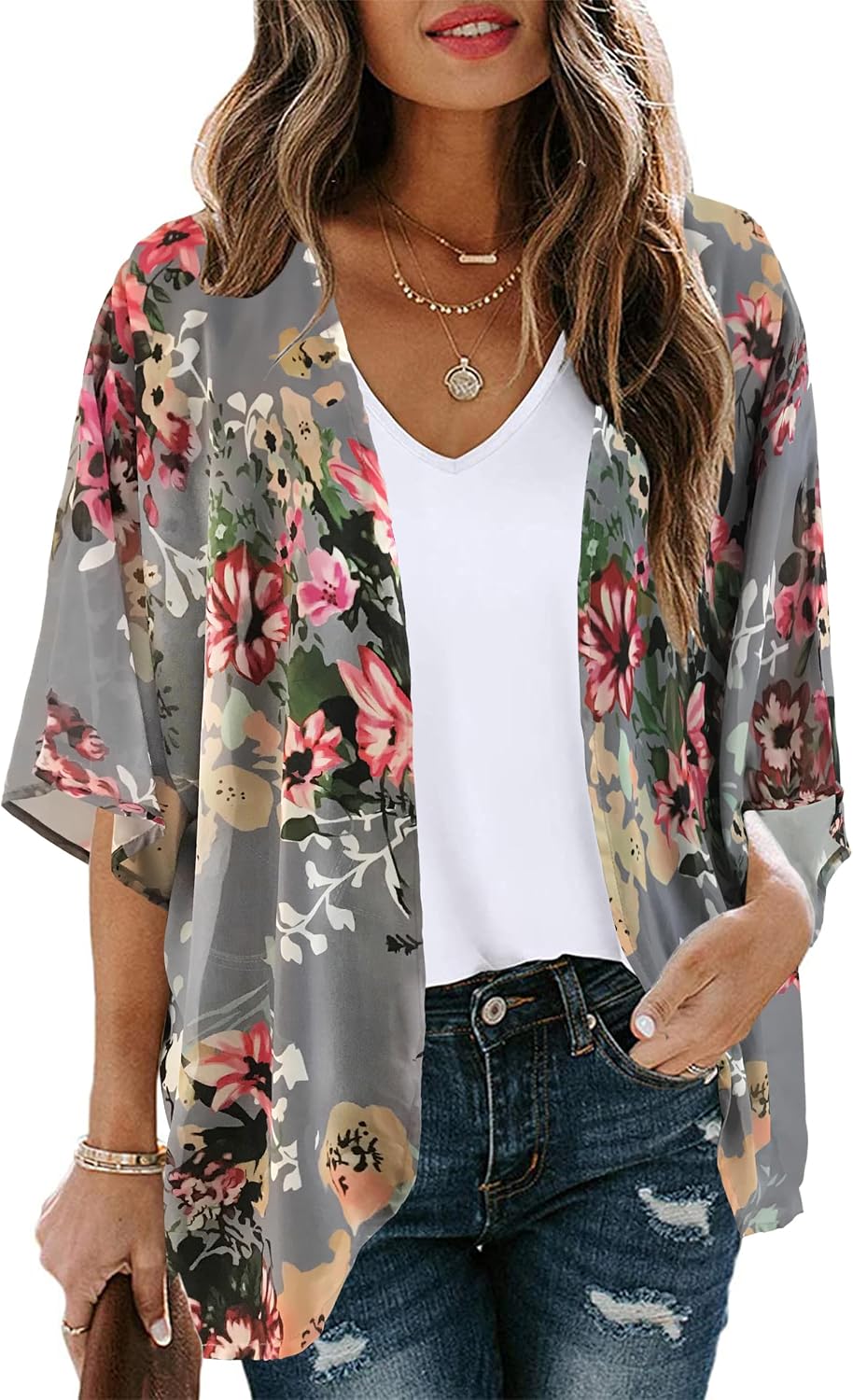
If your measurement lands between two sizes, the right answer depends on how the piece is meant to sit. For an oversized crochet shrug or a batwing poncho, going down keeps it from swamping you. For a fitted lightweight cardigan you intend to button, going up prevents pulling across the bust.
The exception is a rib knit. Ribbing has meaningful stretch built into the structure, so a rib cardigan will accommodate more than its flat measurement suggests. A loose crochet or an open-stitch knit has drape but far less recovery.
What the fabric content tells you about fit over time
A cotton-rich knit will relax with wear and hold that shape until it is washed. An acrylic or acrylic-blend knit holds its dimensions more stubbornly. A viscose or modal blend drapes heavily and will grow slightly in the body over a day of wear.
This matters when you are choosing between sizes for something you intend to wear often. If you love a piece slightly snug and it is cotton-heavy, it will be comfortable within a week. If it is acrylic and slightly snug, it will still be slightly snug next spring.
A quick checklist before you order
Measure a garment you already own, flat, across the chest, and double it. Compare that to the maker's chart rather than to the size letter. Check the body length against the same garment. Read the fibre content and decide whether you want relaxed or held. If two sizes are close, let the intended silhouette break the tie.
It takes about four minutes with a tape measure and it removes the guesswork that causes almost every return we process.
Where brands measure differently and why it matters
Two makers can both publish a chest measurement and arrive at it differently. One measures the garment flat with the front closed; another measures with an open-front cardigan laid edge to edge, which produces a larger number for the same physical piece. A third measures the body at the narrowest point rather than at the underarm.
This is why comparing a chart to your own body measurement is less reliable than comparing it to a garment you own. Your chest measurement is a fixed number; the ease a designer adds on top of it is not. Garment-to-garment comparison removes that variable entirely.
Three mistakes that produce a return
The first is buying by the letter alone, which we have covered. The second is measuring a stretched garment: if you pull the knit taut against the tape you will add two or three inches that do not exist at rest, and you will end up ordering a size too small.
The third is ignoring the model note. Where a listing says the model is 5'8" and wearing a size S, that tells you how the length will fall on someone of that height. If you are 5'2", a piece described as hip-length on the model will sit closer to mid-thigh on you, which may be exactly what you want or exactly what you do not.
Where to go next
If you are unsure about a specific piece, the measurement chart is on every product page, and we are happy to check a number for you before you order.
Shop Cardigans & Kimonos
Related articles